Private Review
Back to the studio

Collected,
not decorated.

We do not begin with a furniture list. We begin with the architecture, the client and what is already worth keeping.

Rooms are built around significant twentieth-century design, contemporary works, art, custom pieces and objects chosen for authorship rather than effect.

The objective is not to make an interior look finished. It is to make it feel as though it could only have arrived this way.

The rooms

Six rooms at Loma Vista.

Swipe through the house. Each marker names its piece.
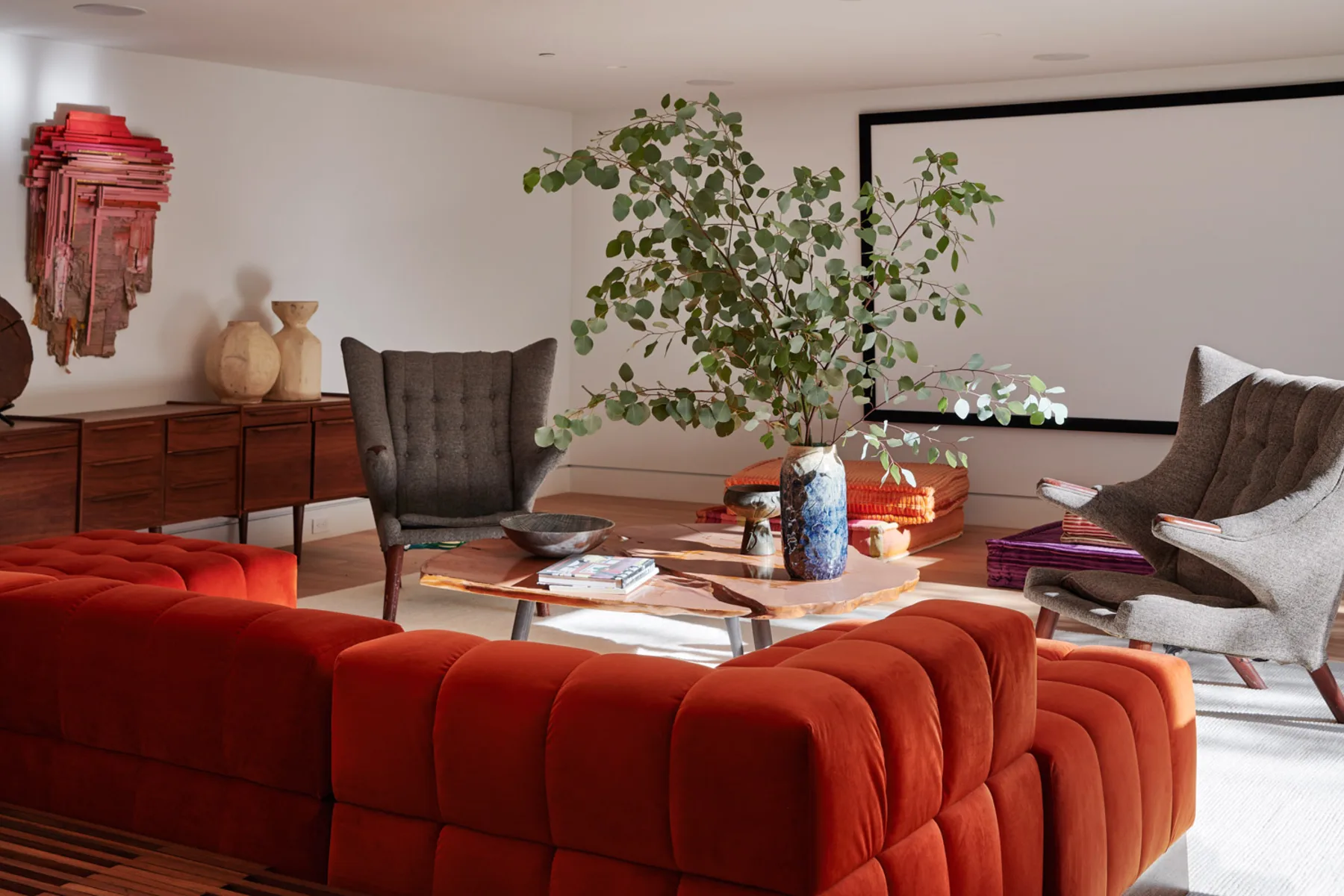
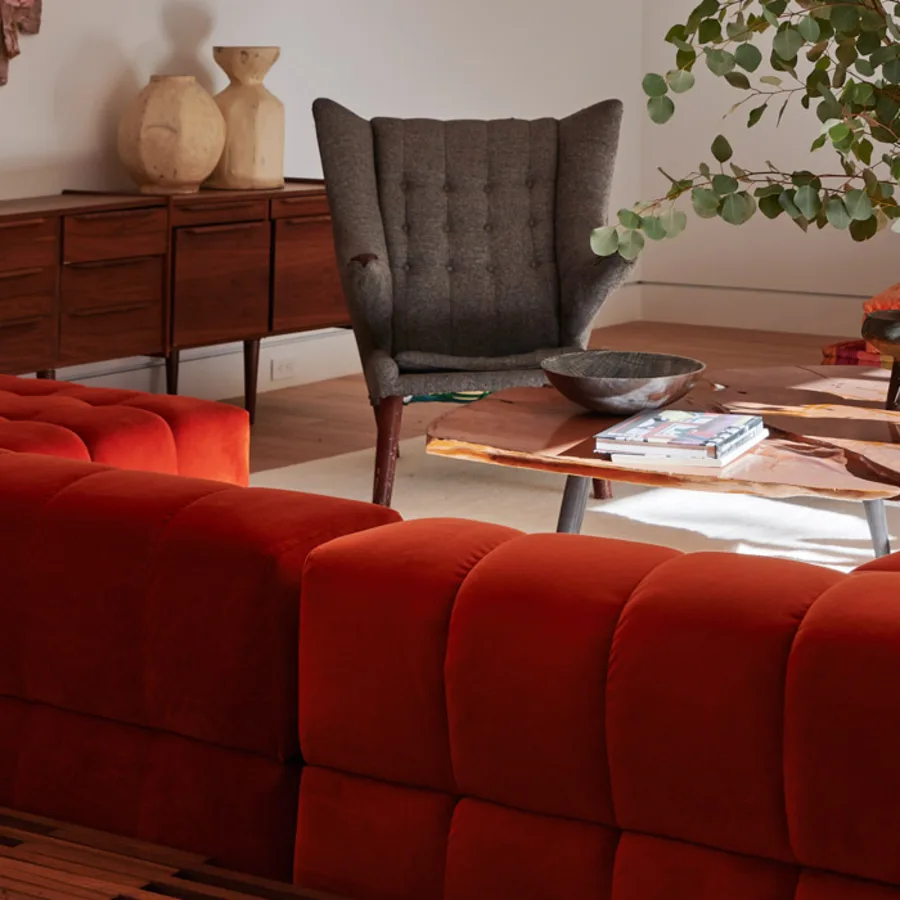
  1. The media room at 1061 Loma Vista: a red channel-tufted sofa, a tufted wingback chair and a free-edge table under a hanging screen.
    The media room01 / 06
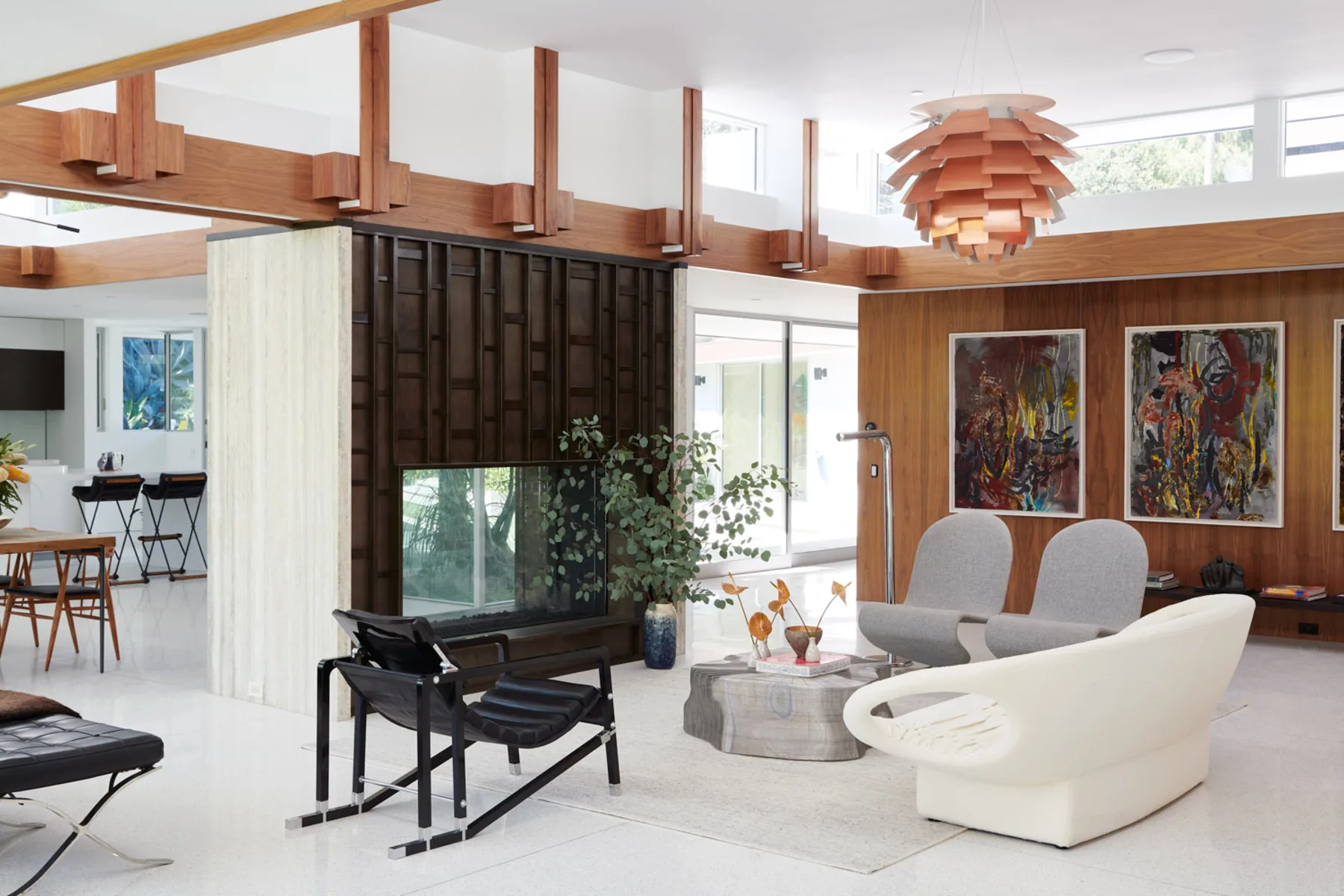
  2. The living room at 1061 Loma Vista under its walnut ceiling, a copper pendant over the seating and paintings on the panelled wall.
    The living room02 / 06
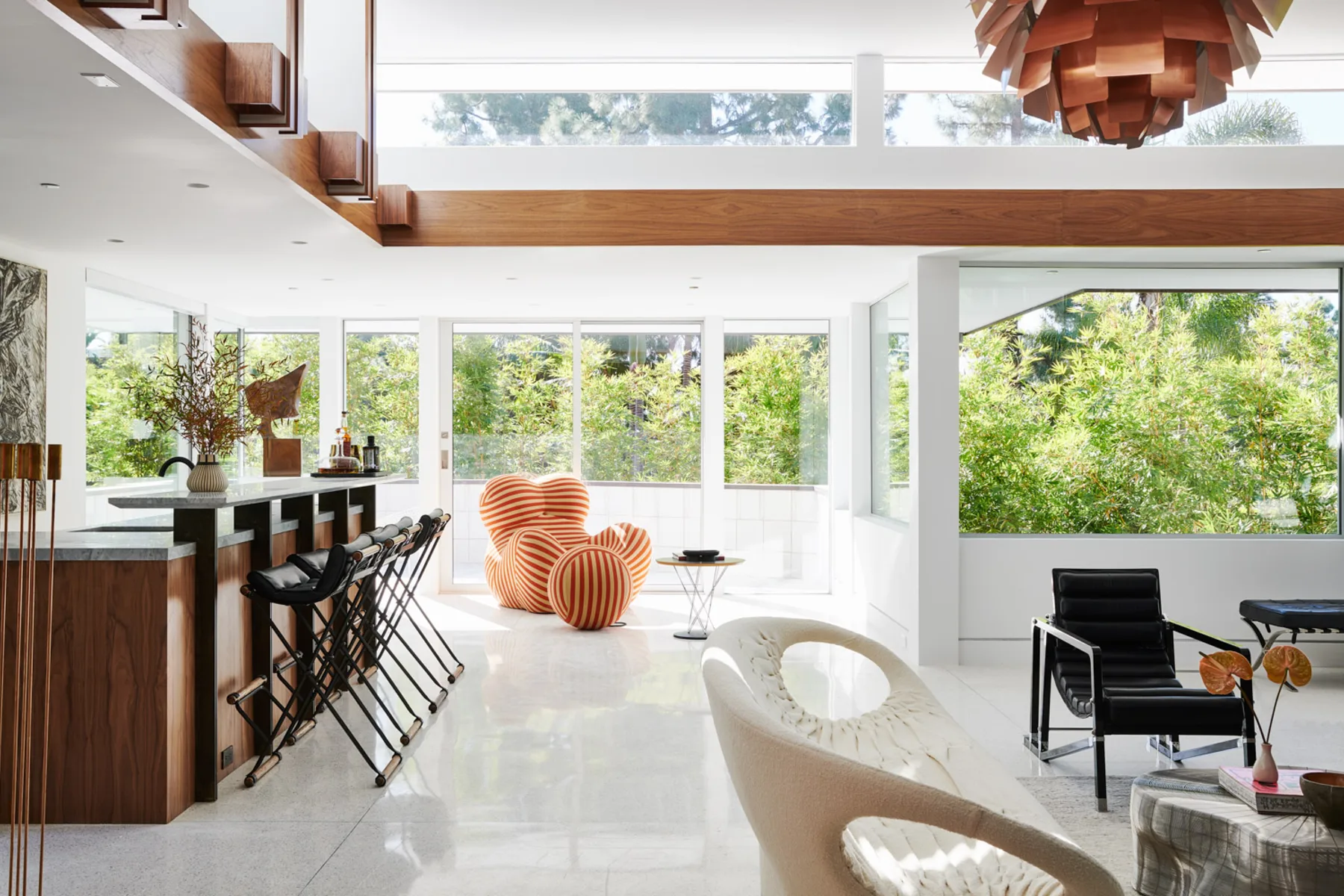
  3. The great room at 1061 Loma Vista: the bar, the terrace beyond the glass and a striped armchair in the light.
    The great room03 / 06
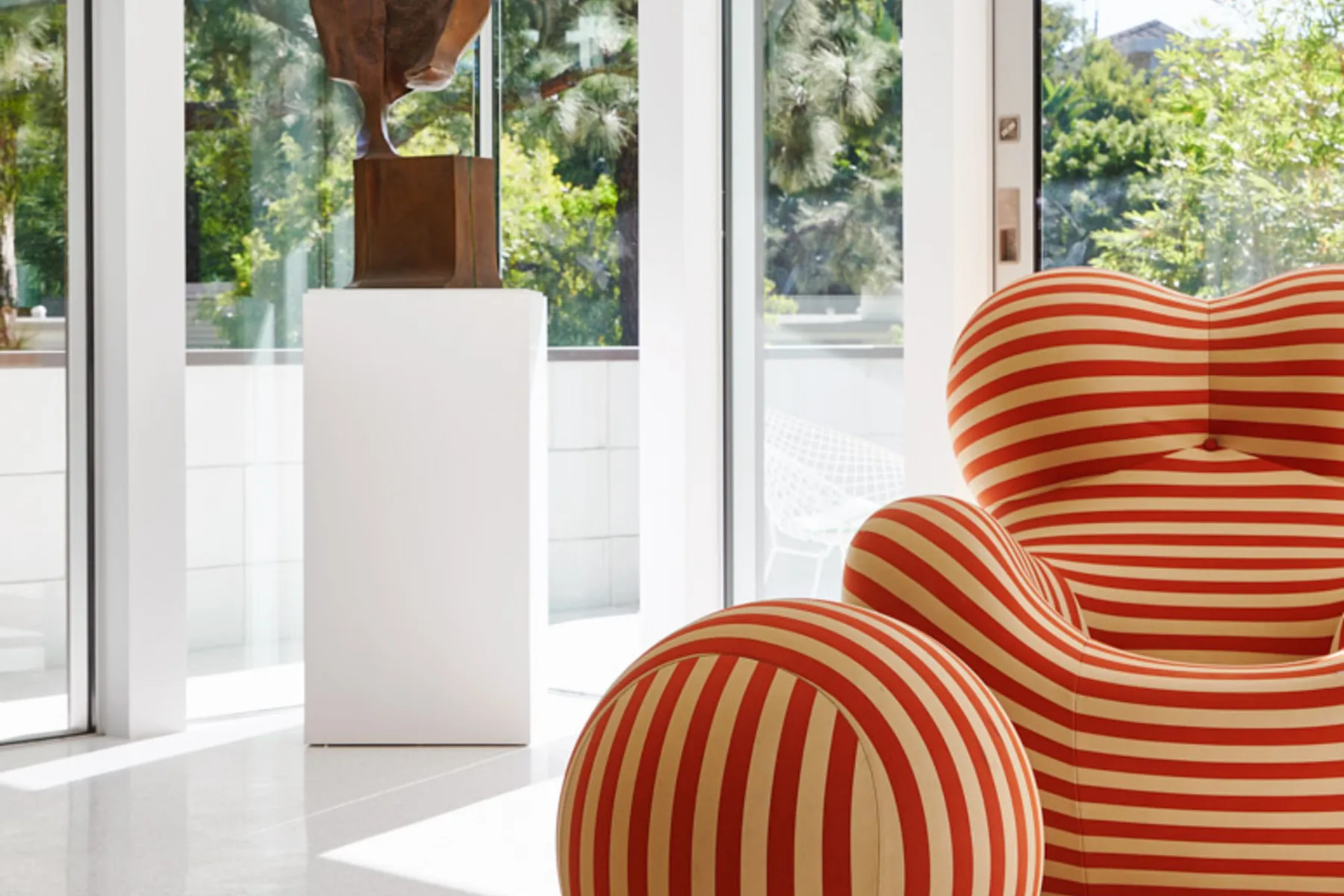
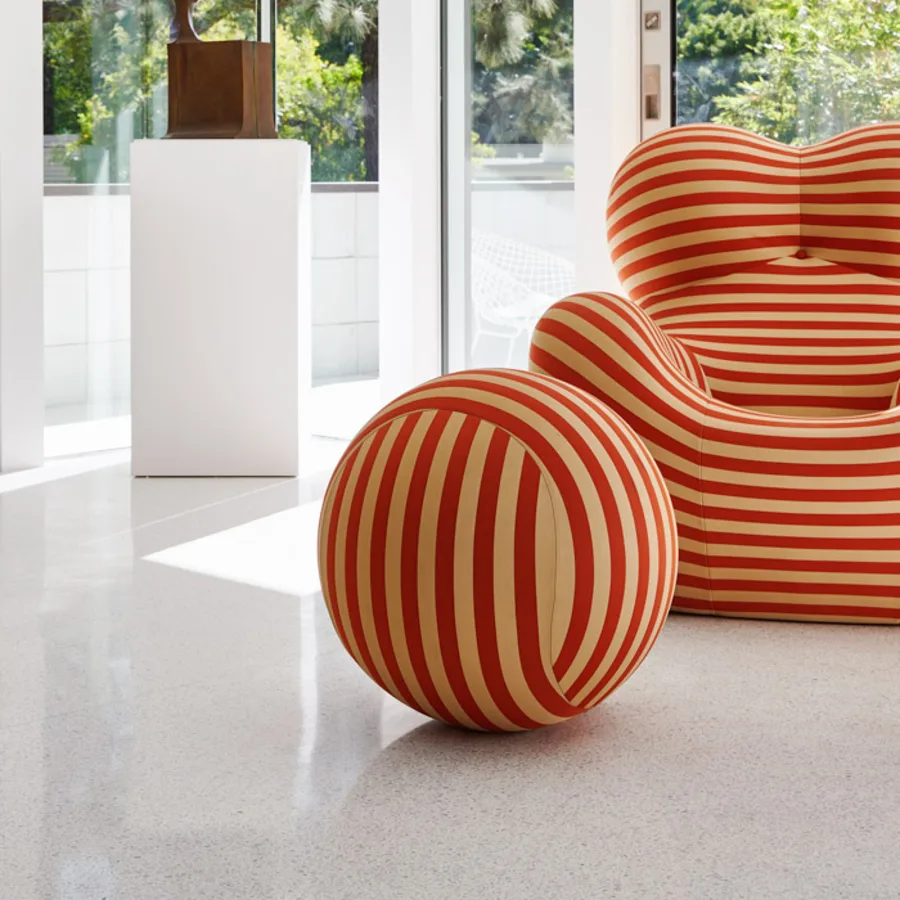
  4. The sitting room at 1061 Loma Vista: a red and white striped armchair and its ball ottoman beside a sculpture on a plinth.
    The sitting room04 / 06
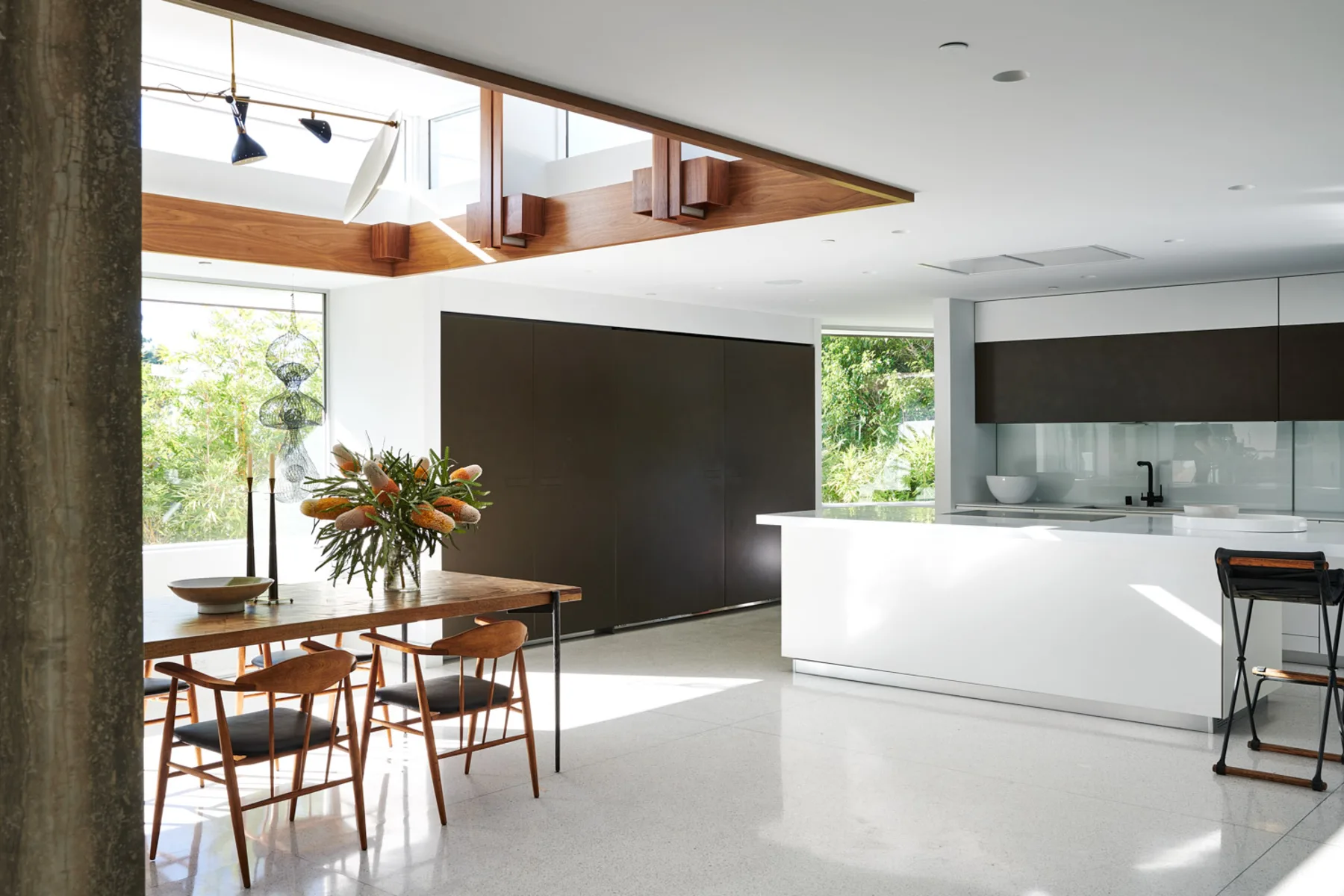
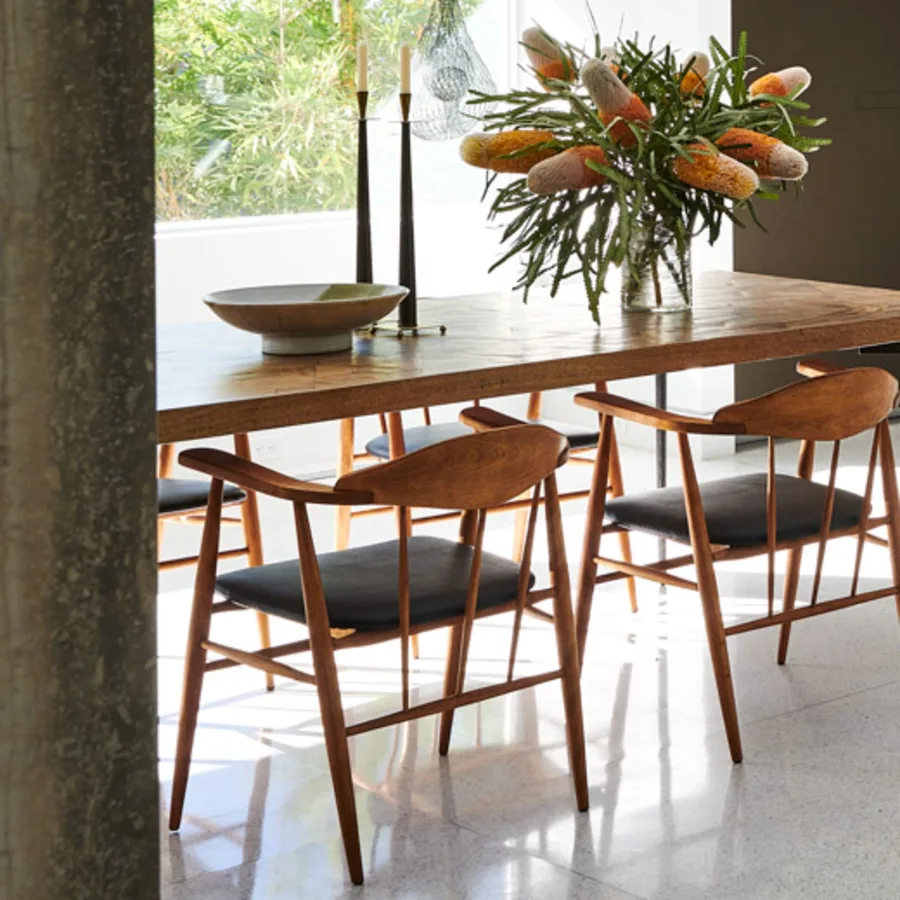
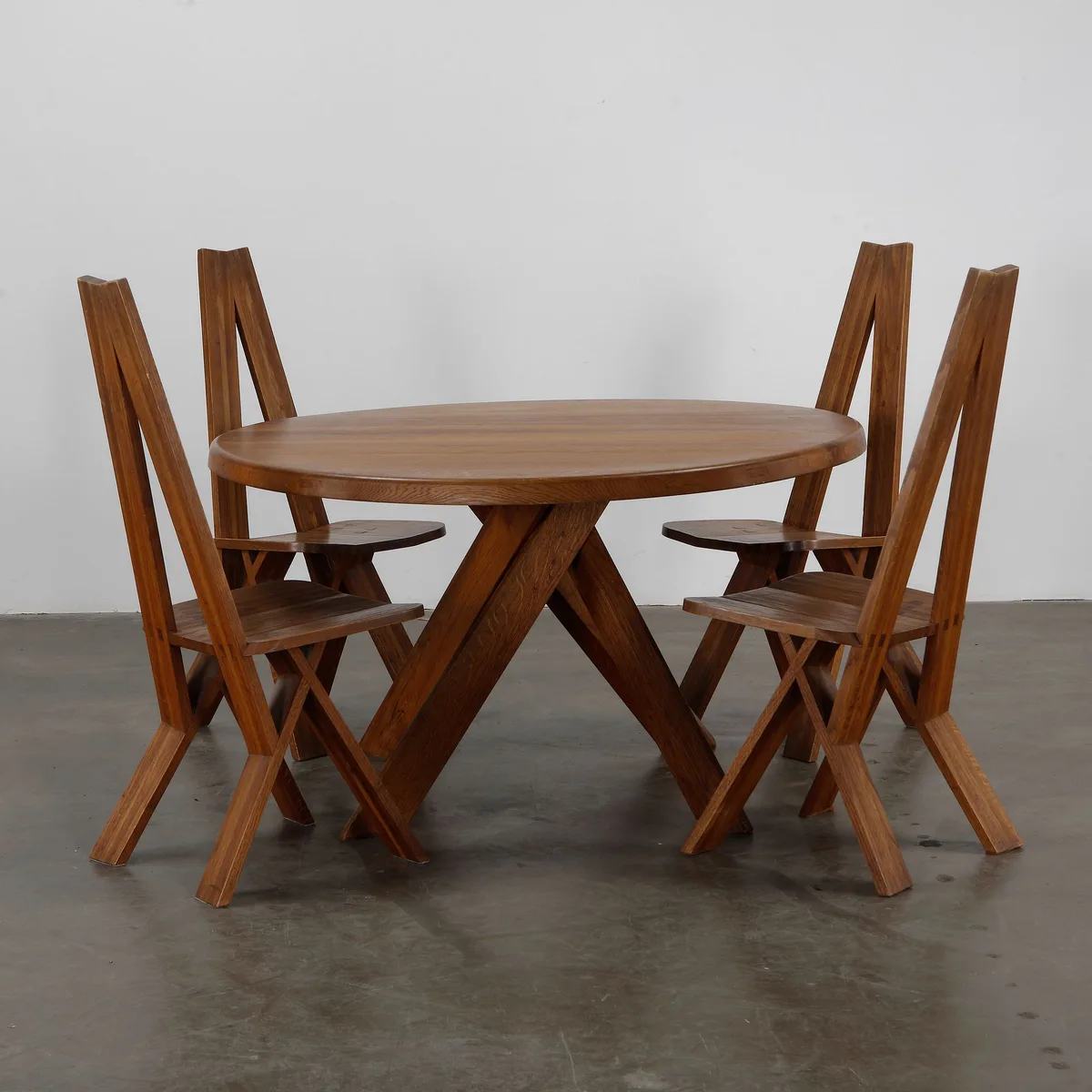
  5. The dining room at 1061 Loma Vista: a teak table and spindle-back armchairs against the dark joinery wall.
    The dining room05 / 06
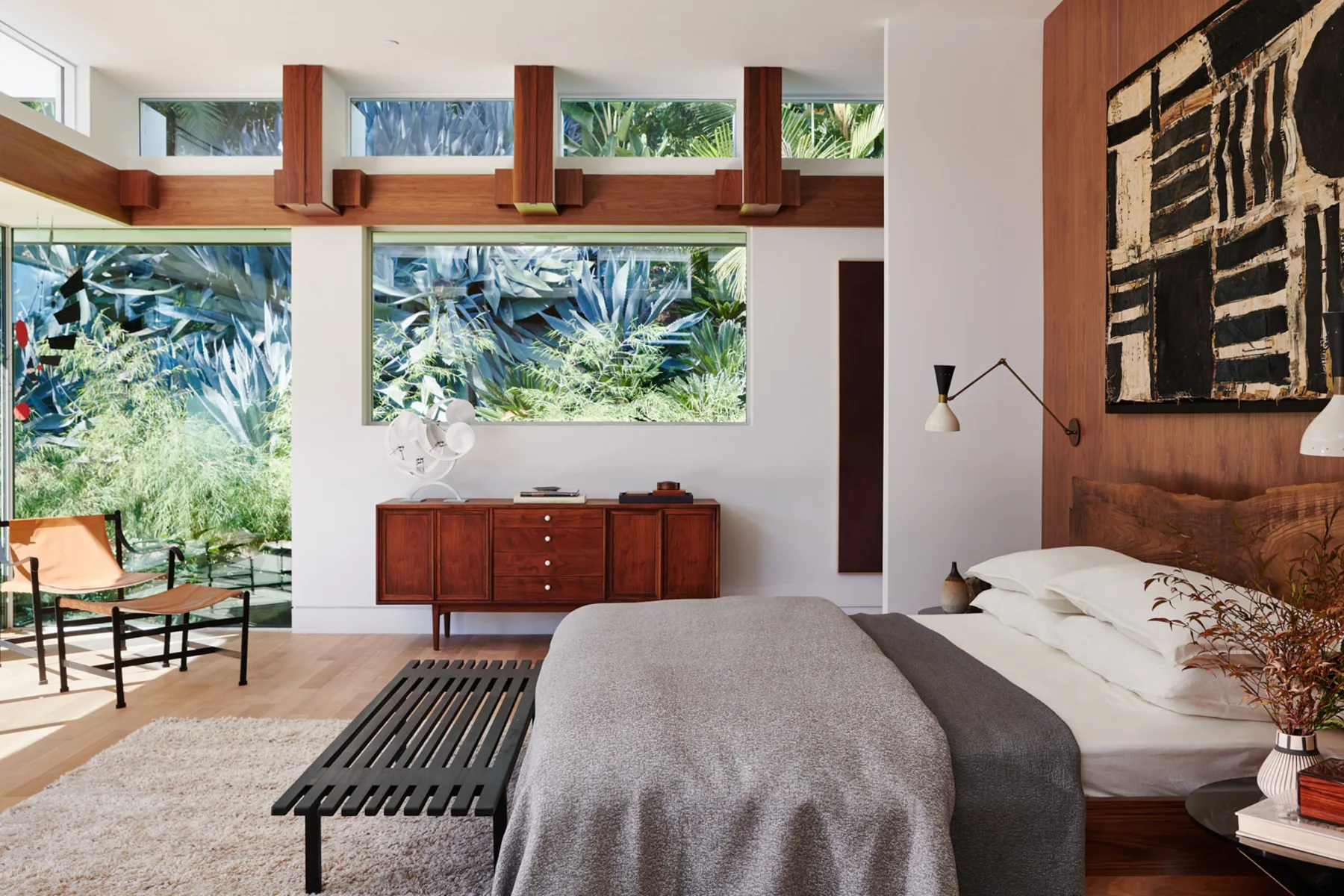
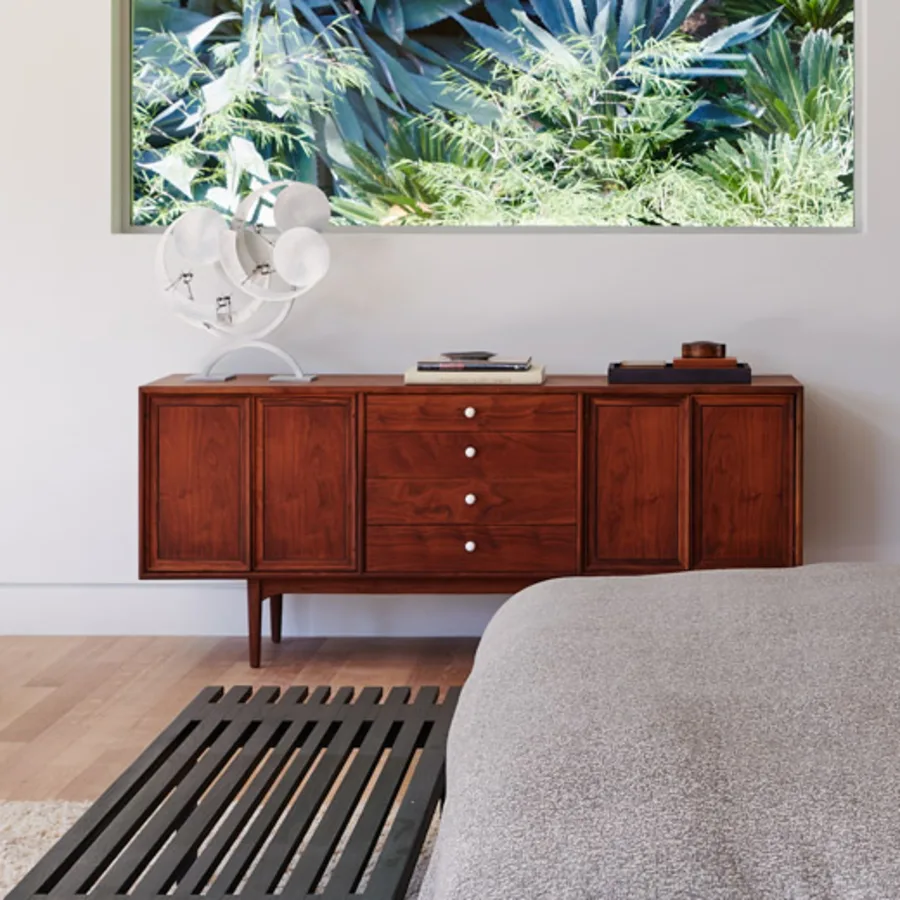
  6. The principal bedroom at 1061 Loma Vista: a slatted bench at the foot of the bed, a rosewood credenza and a wall lamp beside the art.
    The principal bedroom06 / 06

The collection

Important rooms deserve important objects. Depending on the house, the search may lead to work by designers such as Charlotte Perriand, Pierre Jeanneret, Jean Prouvé, Poul Kjærholm, George Nakashima, Charles and Ray Eames, Isamu Noguchi, Sergio Rodrigues, Gio Ponti or Pierre Paulin. Not because the name is important by itself. Because the right piece brings authorship, history, material intelligence and presence into the room.

A collectible interior has a life beyond decoration.
An important object has an author, a date, a history and a provenance of its own. Placed carefully, those pieces become part of the identity of the residence while retaining an independent cultural history.

The process

Architecture before furniture.

Eight steps, from reading the house to the Collection Ledger.

  1. 01

    Read the house

    Architecture before furniture. The plan, the light and the proportions of each room decide what can live in it.

  2. 02

    Edit what exists

    The client's existing collection is photographed, catalogued and understood, piece by piece.

    Each piece

    • Keep
    • Restore
    • Move
    • Store
    • Sell
    • Add
  3. 03

    Build the collection map

    Anchor pieces, supporting pieces, art, objects and custom work are set out before buying begins.

    Collection map

    • Anchor pieces, around which rooms are composed
    • Supporting pieces, quieter, completing the composition
    • Art and objects: ceramics, sculpture, lighting and books
    • Custom work, where the architecture demands something unique
  4. 04

    Search

    Galleries. Specialist dealers. Auctions. Private collections. Estates. Makers. The search can happen anywhere: Los Angeles, New York, Paris, London, Milan, Copenhagen, Brussels, Brazil.

  5. 05

    Verify

    Every significant acquisition is reviewed before commitment.

    Reviewed

    • authorship
    • date and edition
    • provenance
    • condition
    • restoration history
    • dimensions
    • price
  6. 06

    Restore

    Patina is not a defect. Original materials and finishes are preserved wherever possible. Restoration should recover integrity without removing history.

  7. 07

    Install

    Every piece is positioned in relationship to the architecture, the light and the objects around it. Placement, art, textiles and lighting are composed together.

  8. 08

    Record

    Each important acquisition enters the Collection Ledger, the permanent record of the collection.

    Designer • Piece • Date • Edition • Provenance • Source • Condition • Restoration • Invoice • Photography • Location

The collection

How a piece is presented.

Always a specific piece, never a designer-logo wall.

  1. A red and white striped armchair and its matching ball ottoman in a white room at 1061 Loma Vista.

    Gaetano Pesce

    UP5_6 armchair and ottoman

    1969

    In
    1061 Loma Vista
    Room
    the sitting room

    01 / 15

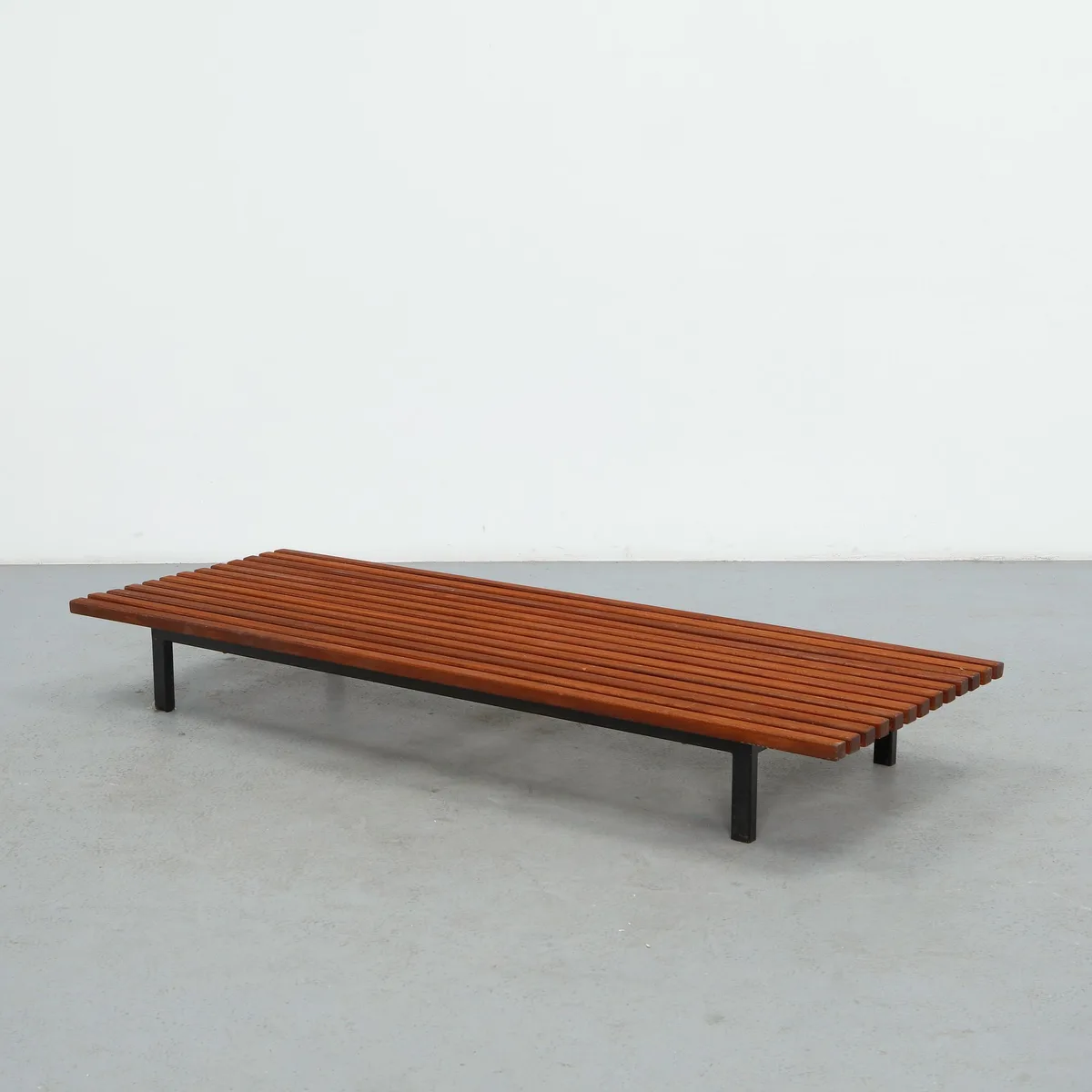
  2. A low slatted mahogany bench on a black steel frame, photographed against a plain wall.

    Charlotte Perriand

    Cansado bench

    1958

    Origin
    Cansado, Mauritania
    Material
    mahogany / steel

    Why here

    Its geometry echoes the architecture without competing with it.

    02 / 15

    Source: Circa, Los Angeles →
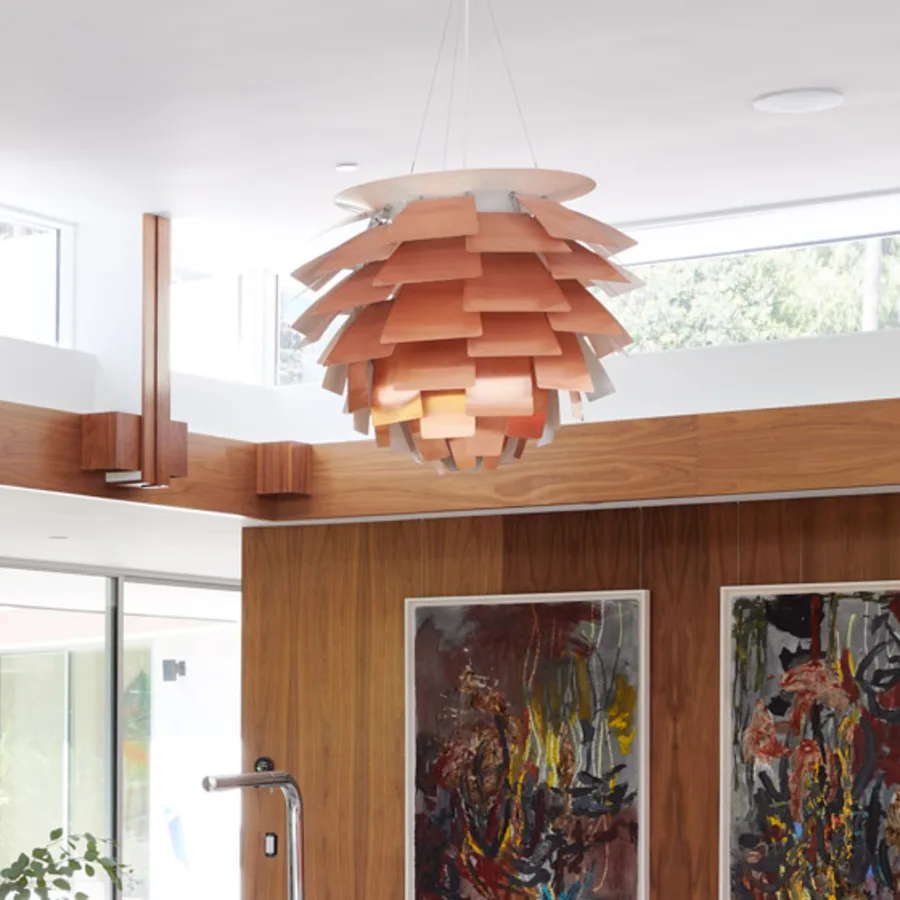
  3. A copper-leaved pendant hanging under the walnut ceiling at 1061 Loma Vista.

    Poul Henningsen

    PH Artichoke

    1958

    In
    1061 Loma Vista
    Room
    the living room

    03 / 15

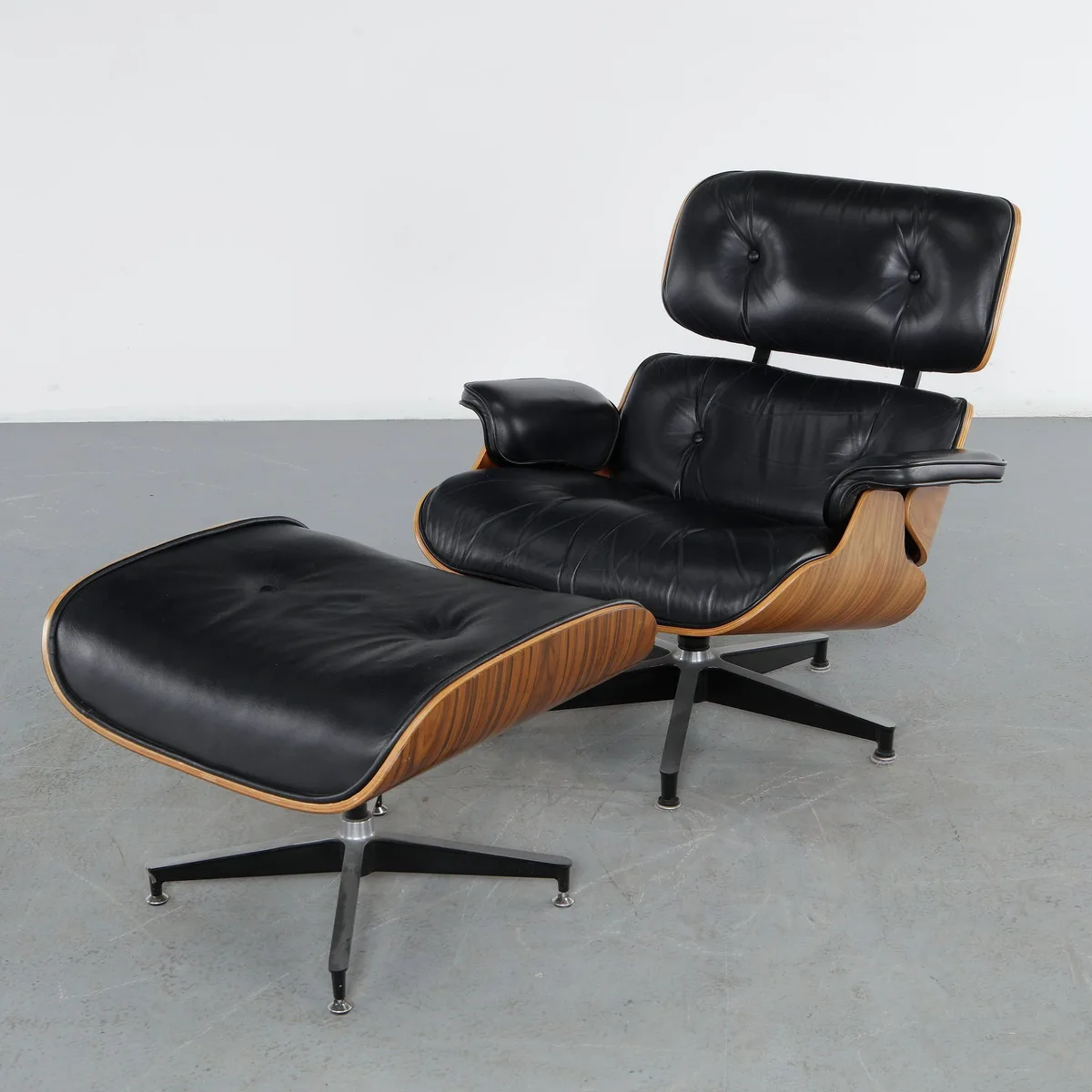
  4. A black leather lounge chair and matching ottoman on moulded plywood shells and star bases.

    Charles & Ray Eames

    Lounge chair and ottoman

    1956

    Model
    670 / 671
    Material
    rosewood / leather

    04 / 15

    Source: Circa, Los Angeles →

  5. A deep red channel-tufted sofa in the media room at 1061 Loma Vista, a wingback chair and a free-edge table beyond it.

    Mario Bellini

    Camaleonda sofa

    1970

    In
    1061 Loma Vista
    Room
    the media room

    05 / 15

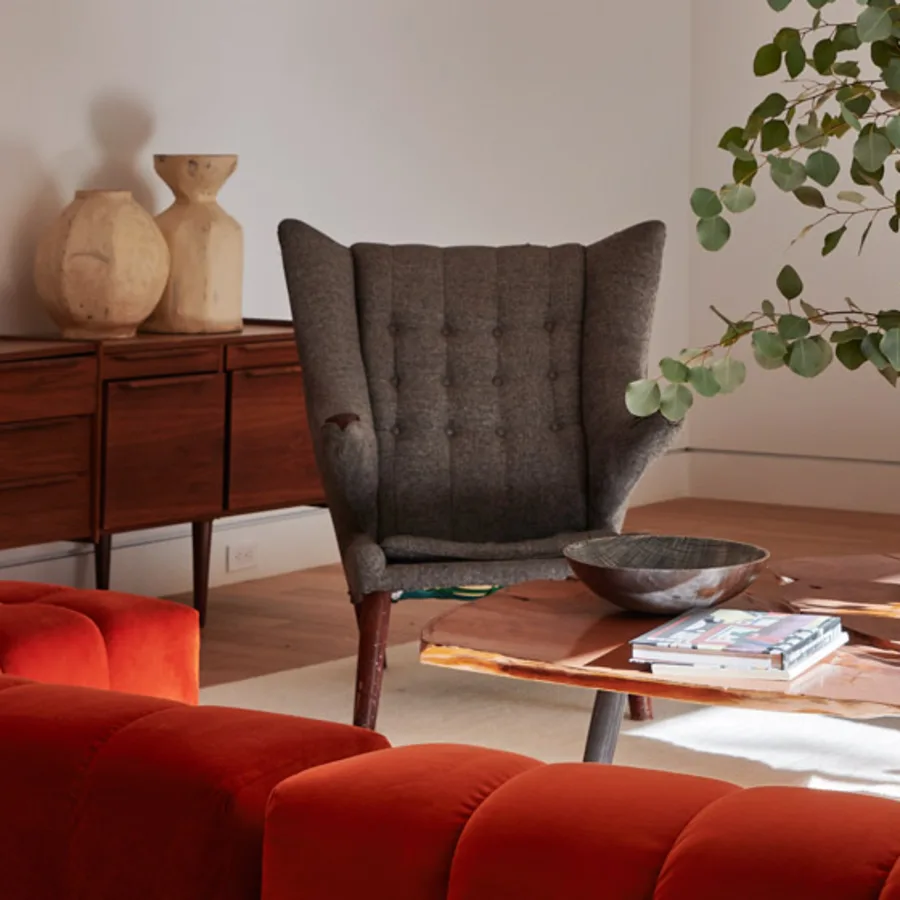
  6. A grey tufted wingback chair beside a rosewood credenza in the media room at 1061 Loma Vista.

    Hans J. Wegner

    Papa Bear chair

    1951

    In
    1061 Loma Vista
    Room
    the media room

    07 / 15

  7. Teak spindle-back armchairs with black leather seats around the dining table at 1061 Loma Vista.

    Maker unrecorded

    Teak spindle-back armchairs

    In
    1061 Loma Vista
    Room
    the dining room

    09 / 15

  8. A rosewood credenza under a window at 1061 Loma Vista, a glass lamp standing on it.

    Maker unrecorded

    Rosewood credenza

    In
    1061 Loma Vista
    Room
    the principal bedroom

    11 / 15

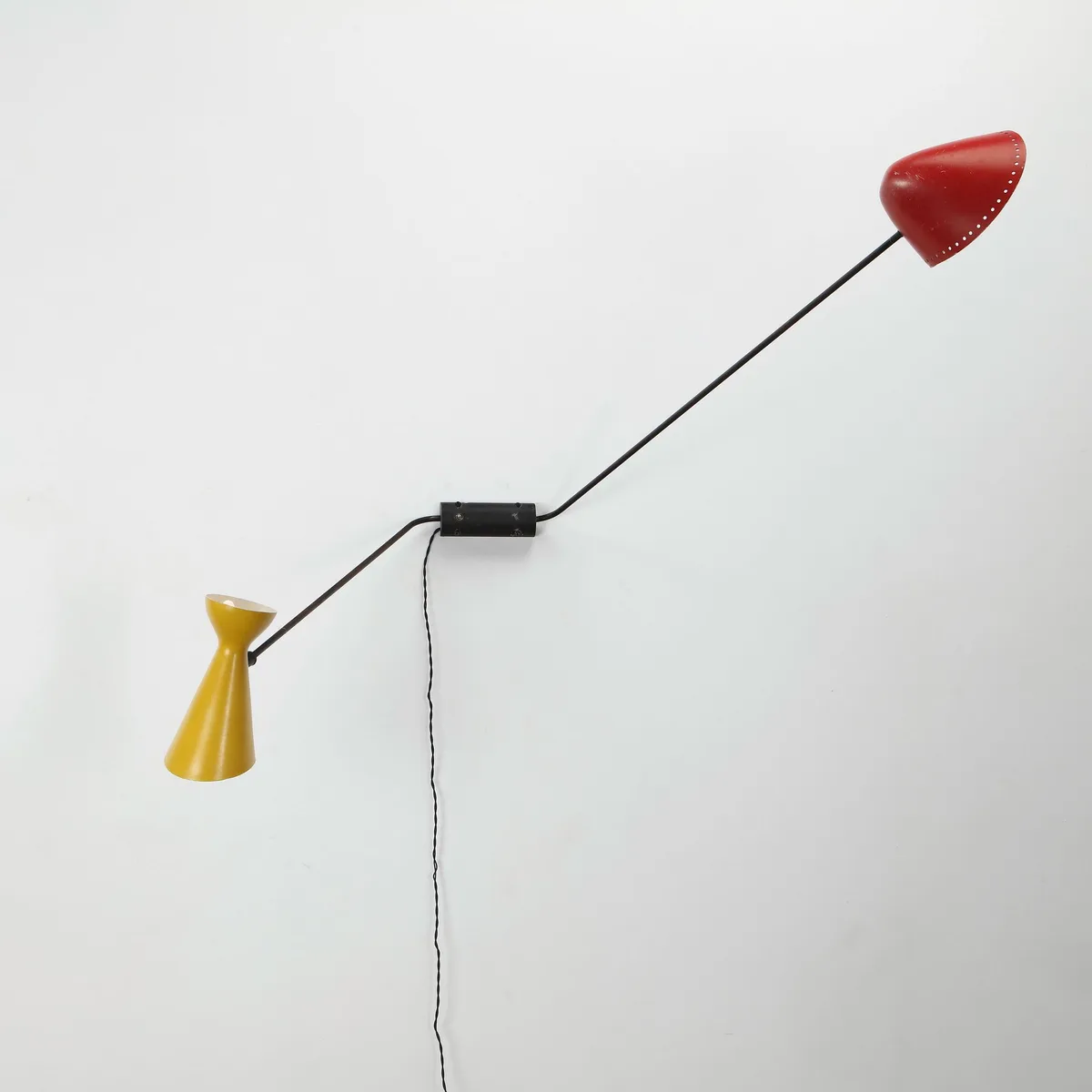
  9. An articulated wall lamp with a long black arm, a red cone shade and a yellow diabolo shade.

    Pierre Guariche

    Double-arm wall lamp

    c. 1950s

    Material
    lacquered steel / brass

    13 / 15

    Source: Circa, Los Angeles →