Collected interiors3 min read
A house with a record
Significant houses change hands with their drawings in a drawer and their furniture unattributed. Philippe Naouri Studio's signature deliverable treats the record of a residence as part of the residence.
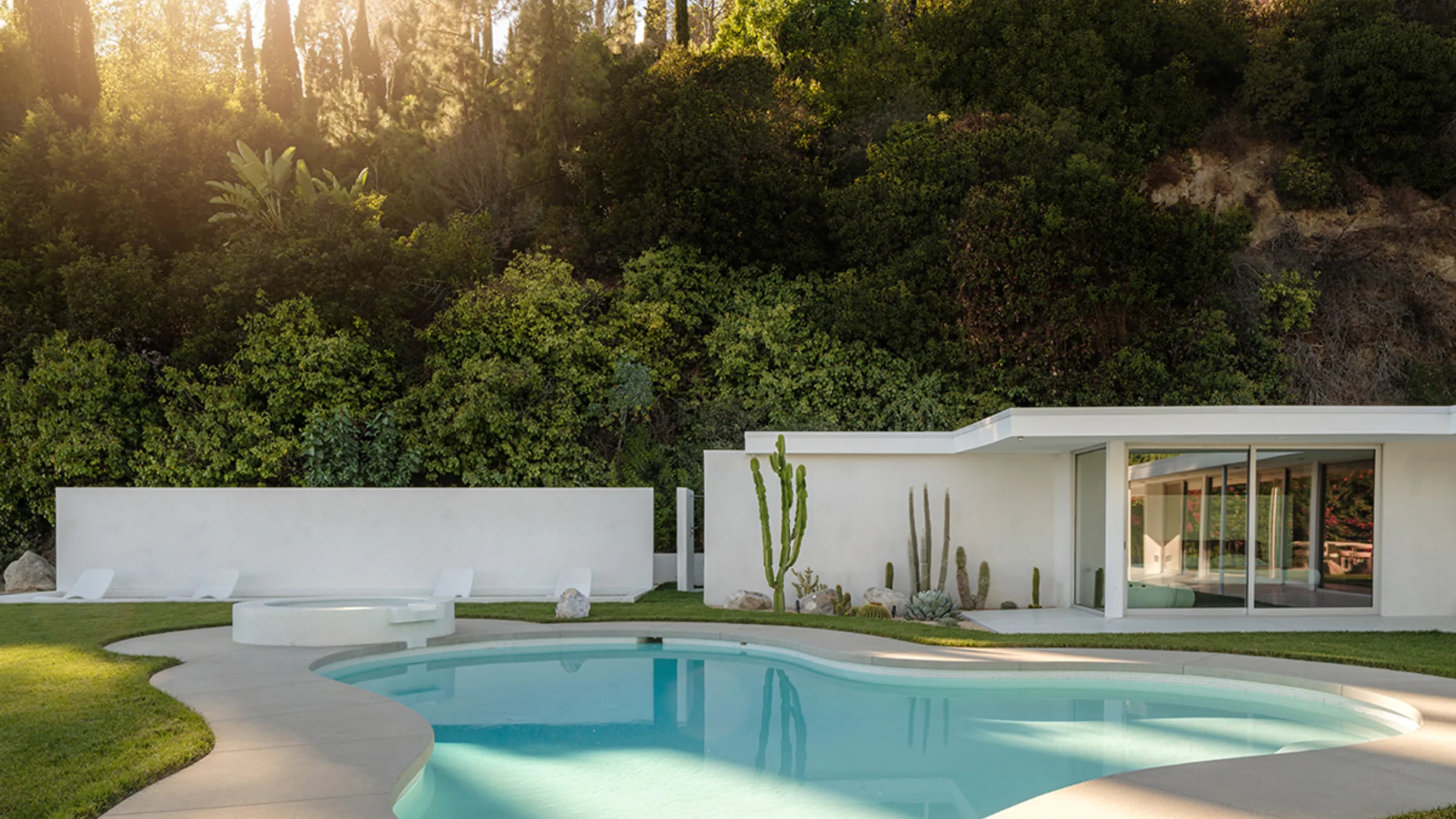
Ask the owner of a serious modernist house who supplied the stone in the entry, and the honest answer is usually a shrug. The contractor knew. The contractor retired. The drawings that would settle the question are in a flat file somewhere, or were never handed over, or were handed over in a format no one can open. The chair in the corner is attributed by family legend. The house, in other words, has forgotten what it is made of — and every future decision about it will be made from memory rather than from fact.
Philippe Naouri Studio's answer to this is unglamorous and, in the residential market, unusual: at completion, every project is organized into one permanent record of the residence. The studio calls it the Residence Archive and describes it as its signature deliverable. Not simply a finished house, in the studio's phrase, but a house with a record.
The House Archive
The first half of the record concerns the building. Final drawings. Materials and finishes, specified. The specialist suppliers who made or sourced them. Equipment and its warranties. Maintenance references. Project photography. The list is deliberately mundane, because its value is operational — it is what a future owner, a future contractor or the house's own upkeep will need, kept in one place and in one order.
For houses of provenance the archive does something further. A Fickett or a Frazer that has been rebuilt with its record intact can prove what was original and what was intervention, which matters for the building's history and, increasingly, for its value. The market for significant Los Angeles modernism has learned to price documentation.
The Collection Ledger
The second half concerns the interior, and here the archive borrows its logic from the art world rather than from construction. A Collection Ledger records, for each piece: designer and maker, the piece itself, year and edition, provenance, condition and any restoration, the purchase record, and its current location in the house.
This is the practical expression of a phrase the studio uses about its interiors — that a room should gain memory instead of a theme. A collected interior is one where the objects have histories, and a ledger is that history written down before it is lost. It is also, quietly, what turns a furnished house into a documented collection, with everything that implies for insurance, for transfer and for the pieces' own futures.
Why it matters
The studio's own summary is three-fold: the record makes provenance visible, it keeps maintenance and any future transfer simple, and it gives the residence one coherent account of what was designed, commissioned and acquired. There is a fourth consequence it does not state, which is that the next reading of the property — by whoever makes it, decades on — begins from what is true rather than from what can be remembered.
The house leaves the studio with its memory intact. In a category where the memory is usually the first thing lost, that is not an add-on. It is the point.